
"from South America"
4000 article(s) found
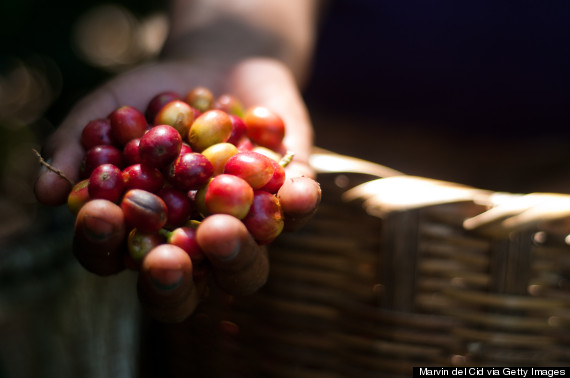
Introduction to El Salvador Coffee beans El Salvador: Parkmara Coffee from South America
Many coffee lovers will not know the country of El Salvador, which is located in Central America, bordered by Guatemala and Honduras in the north, and the Pacific coastline in the west and south. El Salvador is the smallest country in Central America and the most densely populated country in Central America. The topography is mainly mountainous and plateau, with many volcanoes. Santa Ana active volcano is 2385 meters above sea level.

Introduction to the characteristics of the flavor description of Peruvian coffee organic coffee varieties
In 1542, the Spanish royal family set up the Government House in Lima and established the Governor's District of Peru, which became the center of Spanish colonial rule in South America. At that time, Peruvian commerce was prosperous, merchants controlled most of South America's import and export trade, and the precious metals and other goods looted by the Spaniards from South America were shipped out of Peru. The colonists encroached on land in Peru, forced the Mita system, and forced the Indians to

Introduction to Coffee Bean producing areas-- characteristics of Honduran Coffee from Honduras in South America
Well-known representative coffee: Honduran coffee seems strange to many coffee drinkers. When it comes to coffee production, the geographical conditions of Honduras are no less than those of neighboring coffee-producing countries such as Guatemala and Nicaragua. However, in the past, Honduras was more well-known in the consumer market because it did not have strong support in the handling and transportation of raw beans.

soft, silky Colombia coffee in northwest south America
The National Coffee Management Association of Colombia, like Kenya's National Management Association, is a model for coffee organizations. Colombia is more concerned with product development and production promotion than other producing countries. It is this, coupled with its superior geographical and climatic conditions, that makes Colombia coffee delicious and famous all over the world. Coffee's status in Colombia is illustrated by the following examples
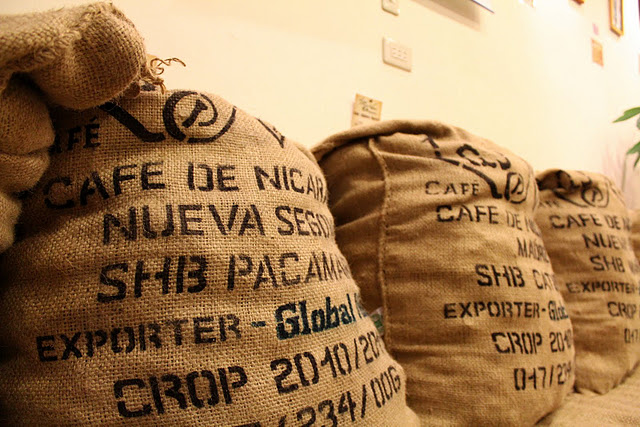
Salvadoran coffee beans Salvadoran coffee refers to Salvadoran hot spring coffee from South America
Many coffee lovers will not know the country of El Salvador, which is located in Central America, bordered by Guatemala and Honduras in the north, and the Pacific coastline in the west and south. El Salvador is the smallest country in Central America and the most densely populated country in Central America. The topography is mainly mountainous and plateau, with many volcanoes. Santa Ana active volcano is 2385 meters above sea level.

Colombian coffee bean flavor producing areas in northwestern South America introduce the characteristics of Colombian coffee
Colombia, located in the northwest of South America, is a beautiful country with a long history. Indians have lived on this land since ancient times. It was colonized by Spain in 1531 and gained independence in 1819. It was renamed in 1886 to commemorate Columbus, the discoverer of the American continent. Colombia has beautiful mountains and rivers, beautiful scenery, pleasant climate and four seasons.

Coffee bean flavor of American beans, African beans and Asian beans
[introduction] Coffee is rich and interesting in the world. Coffee from different continents has its own characteristics. Coffee is the product of the equator to 15 degrees north latitude. Therefore, it is produced in South America, Asia and Africa. However, the coffee produced from the equator to 15 degrees north latitude is so strong and bitter that only some people who drink coffee and do not know its taste will like it. Actually, the best coffee should be

The world's major coffee producing areas introduce the basic knowledge of fine coffee coffee beans represented by all continents
Coffee comes from coffee beans, which are harvested and processed from the fruit of trees. Coffee trees grow at the center of the equator, between latitudes of 25 degrees south and north, and are called the homes of tropical or subtropical countries called coffee belts. At present, there are about 60 coffee-producing countries. Coffee is produced in South America, Central America, the West Indies, Asia, Africa, Arabia, the South Pacific and

Coffee producing area of South America: which producing area of Colombian coffee bean brand has the best coffee?
Professional coffee knowledge exchange more coffee bean information please follow Coffee Workshop (Wechat official account cafe_style) Front Street-about Colombian coffee the potential of Colombian boutique coffee is full in the past, Colombia paid more attention to the commercial coffee bean market, but after 2001, Colombia began to enter the relatively niche boutique coffee market, compared with Brazil, which also belongs to Central and South America.

Introduction of Coffee Bean producing areas-- Costa Rican Fine Coffee from South America
Well-known representative coffee: Tarrazu Costa Rica, like other Central American countries, widely grows Arabica coffee. Its coffee is mainly grown in two high areas, one is the high area near the capital San Jose, and the other is the Tarrazu mountains southeast of San Jose. Because coffee is grown in Costa Rica at high altitudes.

Heilongjiang "Coffee" goes to South America to grow Coffee beans: to build Chinese Coffee Brand
Chinanews.com, Harbin, Feb. 22 (Shi Yifu)-on the 22nd, the Heilongjiang Coffee Industry and Communication Alliance announced that the alliance decided that six of its member units would go to Argentina to grow coffee beans, and then make use of Brazilian baking technology to create their own coffee brands that are sold back to China. In the past three years, Harbin, the capital of northern Xinjiang, has settled in more than 400 cafes of all kinds, and the coffee has disappeared every month.

Peruvian organic coffee beans, a major coffee producer in western South America
Coffee origin: Peru (Peru) is also a major coffee producer. Up to 98% of Peruvian coffee is grown in forest areas, and most producers are small farmers. Peru has good economic conditions and a stable political situation, thus ensuring the good quality of coffee. However, there are many local problems, in addition to guerrilla warfare and drug trafficking, in the mid-1990s in the coastal areas
High quality imported santa rita from Santa Rita, Colombia, Central and South America
Colombia Santa Rita Special Reserve country: Colombia: Antioquia: altitude: 1600-2100 m treatment: washed varieties: Kaduai, Kaddura Manor: Santa Rita flavor: sugar, clean, medium alcohol thickness

Introduction to the price of manor flavor description treatment method in Peruvian coffee production area
In 1542, the Spanish royal family set up the Government House in Lima and established the Governor's District of Peru, which became the center of Spanish colonial rule in South America. At that time, Peruvian commerce was prosperous, merchants controlled most of South America's import and export trade, and the precious metals and other goods looted by the Spaniards from South America were shipped out of Peru. The colonists encroached on land in Peru, forced the Mita system, and forced the Indians to
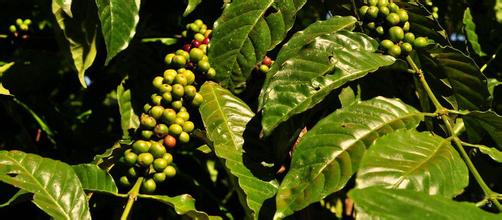
Venezuelan coffee beans from South America have the characteristics of light taste and less sour taste.
Venezuela oil was once considered the main export of Venezuela (Venezuela). Although coffee trees were introduced from Martinique in 1730 and Venezuela, coffee production was almost abandoned at the height of the oil industry. Recently, coffee plantations have begun to recover, with the original Tipica and bourbon coffee trees and new plantations for coffee.

Coffee from Central and South America, the birthplace of Ethiopian coffee
Coffee trees come from Ethiopia, from wild coffee forests and semi-developed land to traditionally operated plots of land to modern plantations. About 50% of the coffee is grown more than 1500 meters above sea level. The flavor of Ethiopian coffee is difficult to describe. It is neither strong nor sour. Therefore, it is not suitable for deep baking, otherwise it is easy to lose.

Coffee producing area and coffee flavor introduction what kind of coffee producing area produces better coffee?
Coffee comes from coffee beans, which are harvested and processed from the fruit of trees. Coffee trees grow at the center of the equator, between latitudes of 25 degrees south and north, and are called the homes of tropical or subtropical countries called coffee belts. At present, there are about 60 coffee-producing countries. Coffee is produced in South America, Central America, the West Indies, Asia, Africa, Arabia, the South Pacific and

Description of Latin American coffee flavor, introduction of Latin American coffee
The characteristics of the flavor of Central and South America: balanced, moderately sour and mellow Central and South America is the world's largest coffee producing area, where there are numerous boutique coffees. Take Colombia, Guatemala or Brazil as an example, good coffee is enough to make people dazzling. What is the resource advantage that makes Central and South America so good? French naval officer Gabriel Ma in 1721

Introduction to the mild taste of high-quality coffee beans in Peruvian coffee producing areas
In 1542, the Spanish royal family set up the Government House in Lima and established the Governor's District of Peru, which became the center of Spanish colonial rule in South America. At that time, Peruvian commerce was prosperous, merchants controlled most of South America's import and export trade, and the precious metals and other goods looted by the Spaniards from South America were shipped out of Peru. The colonists encroached on land in Peru, forced the Mita system, and forced the Indians to

Interpretation of the flavor characteristics of individual coffee beans from all over the world
Coffee trees grow in tropical or subtropical agricultural gardens centered around the equator and called coffee belts. In addition, growing coffee also requires daylight and proper shade, which is most suitable for planting on fertile soil or volcanic ash soil. Therefore, the origin of coffee is widely distributed in South America, Central America, the West Indies, Asia, Africa, Arabia, the South Pacific and Oceania. If not